Hydration and Intermittent Fasting: Why Water Matters More When You Fast
Fasting changes how your body handles water. When you skip meals, you lose a major source of daily hydration and your body sheds stored water along with glycogen. Staying on top of fluid intake during fasting windows is essential.
Last updated: April 2026
from food
gram of glycogen
= well-hydrated
Why Fasting Increases Dehydration Risk
Intermittent fasting is one of the most popular dietary approaches, with protocols like 16:8 (16 hours fasting, 8 hours eating), 18:6, 5:2, and OMAD (one meal a day) gaining widespread adoption. While the metabolic benefits of IF are well-documented, the hydration impact is often overlooked.
When you eat, a significant portion of your water intake comes from food itself. Fruits, vegetables, soups, and even grains contain water. A population survey published in Nutrients found that food contributes 27% of total water intake in the UK and up to 36% in France, depending on diet composition. During fasting windows, this source disappears entirely.
Fasting also triggers glycogen depletion. Your liver and muscles store glucose as glycogen, and each gram of glycogen is bound to 3 to 4 grams of water. As your body taps into glycogen reserves during a fast, that stored water is released and excreted. This is why the scale drops quickly in the first days of fasting, and why you may notice more frequent urination despite drinking less.
A third factor is behavioral: meals serve as natural hydration cues. Many people drink water with meals or around meal preparation. When meals are removed from a 16-hour window of the day, those cues disappear. Research on Ramadan fasting (the most-studied form of time-restricted eating) has documented approximately 1% body mass water loss by sunset on a typical fasting day, even at rest. A study of 380 fasters found total water intake fell to a median of just 1,670 mL/day during fasting periods.
Hydration Considerations by Fasting Protocol
Different intermittent fasting protocols create different hydration challenges. The longer your fasting window, the more deliberate you need to be about fluid intake.
16:8 (Most Common)
Fast 16 hours, eat within 8. The most manageable for hydration since you skip one meal (usually breakfast). Focus on drinking water throughout the morning fasting hours when you’d normally hydrate at breakfast.
18:6
Fast 18 hours, eat within 6. The extended fasting window means two fewer meal-based hydration opportunities. Keep a water bottle visible during fasting hours as a physical reminder.
OMAD (One Meal a Day)
The highest dehydration risk of any daily protocol. With 23 hours of fasting, you lose nearly all food-based water and most meal-triggered drinking. Deliberate hydration throughout the day is critical.
5:2
Normal eating 5 days, restricted calories (500–600) on 2 days. On restricted days, the low food volume means less food-sourced water. Compensate with extra fluid intake on those days.
What the Research Shows
Most hydration research on fasting comes from studies of Ramadan, where participants fast from dawn to sunset (roughly 12 to 18 hours depending on season and location). While Ramadan fasting restricts both food and water during daylight hours (unlike most IF protocols which allow water), the findings on food-derived hydration loss and physiological changes are relevant to all forms of time-restricted eating.
Staying Hydrated While Fasting
The good news: most intermittent fasting protocols allow unrestricted water intake during fasting windows. Water, black coffee, and plain tea do not break a fast. The challenge is remembering to drink enough without the natural cues that meals provide.
- Front-load hydration in the morning. If you skip breakfast, drink a full glass of water when you wake up. Your body has been fasting overnight and is already in a mild dehydration state.
- Replace meal-based water deliberately. If food normally provides 27–36% of your water, aim to replace that with extra fluid during fasting hours. For most people, this means 2 to 3 additional glasses beyond your usual intake.
- Monitor your bathroom visits. Research shows that 7+ daily bathroom visits indicates adequate hydration. If your count drops on fasting days compared to eating days, you’re likely not drinking enough.
- Watch for early dehydration signs. Darker urine, headaches, fatigue, and difficulty concentrating during fasting hours may signal dehydration rather than hunger. Try drinking water before assuming you need food.
- Consider electrolytes on extended fasts. Fasts longer than 18 hours accelerate glycogen depletion and electrolyte loss. A pinch of salt in water or an electrolyte supplement (check that it’s calorie-free if you want to maintain your fast) can help.
A Simpler Way to Track Hydration While Fasting
Volume-based water tracking (counting glasses or ounces) is tedious for anyone, but especially for fasters who are already monitoring eating windows, macros, and calories. Adding another thing to log creates friction that leads to abandonment.
P Water App: hydration tracking without the hassle
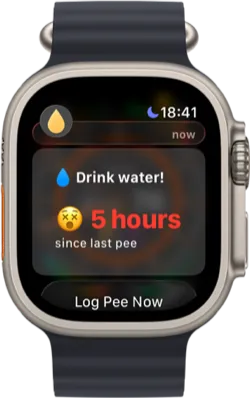
Instead of logging every glass of water, P tracks how often you go to the bathroom. Research shows 7+ bathroom visits per day means you’re well-hydrated. One tap on your way to the bathroom, and you’re done. No volume estimation, no cups to count.
a visit
= hydrated
to measure
For intermittent fasters, this approach is especially useful. You can compare your bathroom frequency on fasting days vs. eating days. If your count drops on fasting days, that’s a clear signal to increase fluid intake during your fasting window.
P also sends reminders when it’s been a long time since your last bathroom visit. During fasting windows, when meal-based hydration cues are absent, these reminders help fill the gap. You can track from your Apple Watch with a single tap, or from your iPhone via widgets and shortcuts.
Intermittent Fasting, Hydration, and Weight Loss
Many people adopt intermittent fasting specifically for weight loss. Hydration plays a dual role here: adequate water intake supports the metabolic benefits of fasting, and dehydration can actually stall weight loss by impairing kidney function and slowing fat metabolism.
The rapid weight loss in the first week of fasting is almost entirely water weight from glycogen depletion. This is normal and expected. Staying hydrated during this phase helps your kidneys process the extra fluid efficiently and supports the transition into fat burning.
Research also shows that drinking water before meals can reduce calorie intake by 13 to 22 percent. For intermittent fasters who eat larger meals in a shorter window, pre-meal hydration may help prevent overeating during the eating window.
Track Hydration While You Fast
One tap on the way to the bathroom. P tracks your daily frequency and lets you know if you’re staying hydrated during fasting windows. No volume logging, no calorie tracking interference.

Frequently Asked Questions
Yes. Water, black coffee, and unsweetened tea do not break a fast. Staying hydrated during fasting windows is essential. When you stop eating, you lose a significant source of daily water intake (food provides roughly roughly 27 to 36 percent of your total water). Drinking water freely during fasting hours helps prevent dehydration.
There is no single number that works for everyone. A practical approach is to monitor your bathroom visits: research shows that 7 or more daily bathroom visits indicates adequate hydration, while 6 or fewer suggests you may need more fluids. During fasting, aim to drink enough that your bathroom frequency stays consistent with your non-fasting days.
Three factors contribute. First, food typically provides roughly 27 to 36 percent of daily water intake, and you lose that during fasting windows. Second, fasting depletes glycogen stores, and each gram of glycogen is stored with 3 to 4 grams of water, which your body excretes. Third, many people simply forget to drink when they are not eating, because meals are a natural hydration cue.
Yes, especially in the first few days. Glycogen depletion releases stored water (3 to 4 grams per gram of glycogen). This is why rapid weight loss in the first week of fasting is largely water, not fat. Staying well-hydrated during this transition helps maintain kidney function and electrolyte balance. The scale will stabilize as your body adapts.
Track bathroom visits instead of water volume. Research shows that urinary frequency is a validated biomarker for hydration. P Water App lets you tap once on the way to the bathroom and tracks whether your daily count suggests adequate hydration. This works well for fasters because it adds no friction to your fasting protocol and requires no volume estimation. You can track from your Apple Watch or iPhone.
This page summarizes peer-reviewed research for educational purposes. It is not medical advice. Consult a healthcare professional before starting any fasting protocol, especially if you have a medical condition or take medication. Hydration apps are wellness tools, not medical devices.