Hydration for Nurses and Healthcare Workers
Twelve-hour shifts, restricted breaks, PPE, and a culture of putting patients first. Healthcare workers face a unique set of barriers to staying hydrated, and the consequences affect both their health and their performance.
Last updated: April 2026
in the US
shift length
= well-hydrated
Why Healthcare Workers Struggle to Stay Hydrated
Nurses and other healthcare professionals face a combination of workplace barriers that make consistent hydration difficult. Unlike office workers who can keep a water bottle at their desk and take breaks freely, clinical staff operate under constraints that actively work against fluid intake.
Long Shifts, Limited Breaks
Twelve-hour shifts are standard in hospital nursing. Busy patient loads mean scheduled breaks are often shortened, delayed, or skipped entirely. A survey of 806 hospital nurses found that they averaged only 26 minutes of break time per 12-hour shift.
Infection Control Restrictions
Open beverages are prohibited in most clinical areas. Water bottles cannot be kept at nursing stations in many facilities due to contamination risk. Drinking requires leaving the patient care area.
PPE as a Barrier
Wearing gowns, gloves, masks, and face shields makes drinking water logistically difficult. Removing and re-donning PPE to take a sip is time-consuming and wasteful, so many workers skip it.
Patient-First Culture
Healthcare workers are trained to prioritize patient needs. Self-care, including drinking water and using the bathroom, is often deferred when patients need attention. This mindset, while admirable, leads to chronic self-neglect.
The Consequences of Workplace Dehydration
Dehydration during shifts affects healthcare workers in ways that can compromise both their own health and patient safety:
- Cognitive impairment. The HANDS On study found that 36% of healthcare staff were dehydrated at shift start, rising to 45% by shift end, with significantly impaired short-term memory. For nurses making medication dosing decisions, monitoring vital signs, and responding to emergencies, these cognitive effects have real clinical implications.
- Increased fatigue. Dehydration is a leading cause of fatigue, compounding the exhaustion of long shifts and contributing to burnout. Fatigued nurses are more likely to make errors and have slower response times.
- Headaches. Dehydration-triggered headaches are common during long shifts, further impairing concentration and work quality.
- Urinary tract infections. Nurses who restrict fluid intake to avoid bathroom breaks during shifts may have concentrated urine for extended periods. Research suggests that increasing water intake can reduce UTI recurrence by nearly 50% in women prone to infections.
- Kidney stones. Chronic workplace dehydration over years increases the risk of kidney stone formation. Healthcare workers who consistently produce low urine volumes are at elevated risk.
What the Research Shows
Practical Hydration Strategies for Shift Workers
Given the constraints of clinical work, the goal is not perfection but consistency. Small, regular fluid intake throughout a shift is more achievable than trying to hit a specific daily target.
- Pre-hydrate before your shift. Drink a full glass of water before clocking in. Starting your shift already hydrated gives you a buffer during busy periods.
- Use every break. Even a 5-minute break is enough to drink 8 ounces. Pair drinking with other break activities (using the restroom, checking your phone) to make it automatic.
- Keep water accessible. If your facility allows it, keep a sealed water bottle in the break room, locker, or designated hydration station. Knowing where your water is reduces friction.
- Set reminders. A discreet vibration on your Apple Watch can prompt you to drink without disrupting patient care. Time-based reminders work better than relying on thirst, which may be suppressed during focused work.
- Track work days vs. off days. Compare your bathroom frequency on shift days vs. days off. If your count drops significantly on work days, your shift hydration strategy needs adjustment.
- Advocate for workplace policies. Encourage your unit to designate hydration stations where sealed containers are allowed. Some hospitals have implemented hydration programs after recognizing the impact on nurse health and retention.
Tracking Hydration During Shifts
Logging water volume is impractical during a 12-hour shift. You do not have time to measure ounces or enter data into an app between patient assessments. But you do go to the bathroom, and each trip is an opportunity to track your hydration with minimal effort.
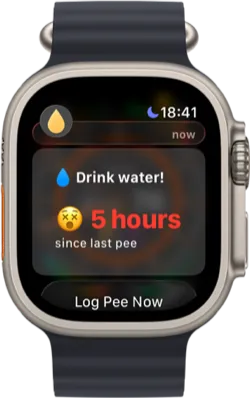
P Water App: hydration tracking without the hassle
Instead of logging every glass of water, P tracks how often you go to the bathroom. Research shows 7+ bathroom visits per day means you’re well-hydrated. One tap on your wrist on the way to the restroom, and you’re done.
from Watch
= hydrated
to measure
For nurses and shift workers, comparing your bathroom count on work days vs. off days reveals whether your shift hydration is adequate. If your count drops from 8 on days off to 4 during shifts, that gap represents the fluid deficit your workplace barriers are creating.
P sends reminders when it’s been a long time since your last bathroom visit. A gentle tap on your wrist during a shift serves as a private nudge to drink water, even when you are focused on patient care. Track from your Apple Watch or iPhone.
Stay Hydrated Through Your Shift
One tap on the way to the restroom. Track your hydration during 12-hour shifts without adding friction to your workflow.

Frequently Asked Questions
A combination of workplace barriers. Twelve-hour shifts with limited breaks, prioritizing patient care over personal needs, infection control policies that restrict beverages in clinical areas, PPE that makes drinking inconvenient, and the physically demanding nature of the work. Many nurses consciously limit fluids to avoid needing bathroom breaks during busy shifts.
Yes. Even mild dehydration (1–2% body weight loss) impairs attention, working memory, and reaction time. For nurses making critical patient care decisions, these effects have real safety implications. Headaches and fatigue from dehydration further compound the demands of shift work.
Research suggests a connection. Concentrated urine from restricted fluid intake is a known UTI risk factor. A study found that increasing water intake by 1.5L/day reduced UTI recurrence by nearly 50% in women prone to infections. See our UTI prevention guide for the full research.
Enough to produce 7+ bathroom visits per day. For a 12-hour shift, this means consistent sipping rather than loading up before or after. Even small amounts every 1 to 2 hours help maintain cognitive performance. Compare your bathroom count on shift days vs. off days to assess whether your approach is working.
Track bathroom visits, not water volume. One tap on your Apple Watch on the way to the restroom takes about 2 seconds. P Water App tracks your daily count and alerts you if frequency drops. If your count is lower on work days than days off, you are likely not drinking enough during shifts.
This page summarizes peer-reviewed research for educational purposes. It is not medical advice. Consult a healthcare professional if you have concerns about dehydration or related health conditions. Hydration apps are wellness tools, not medical devices.